
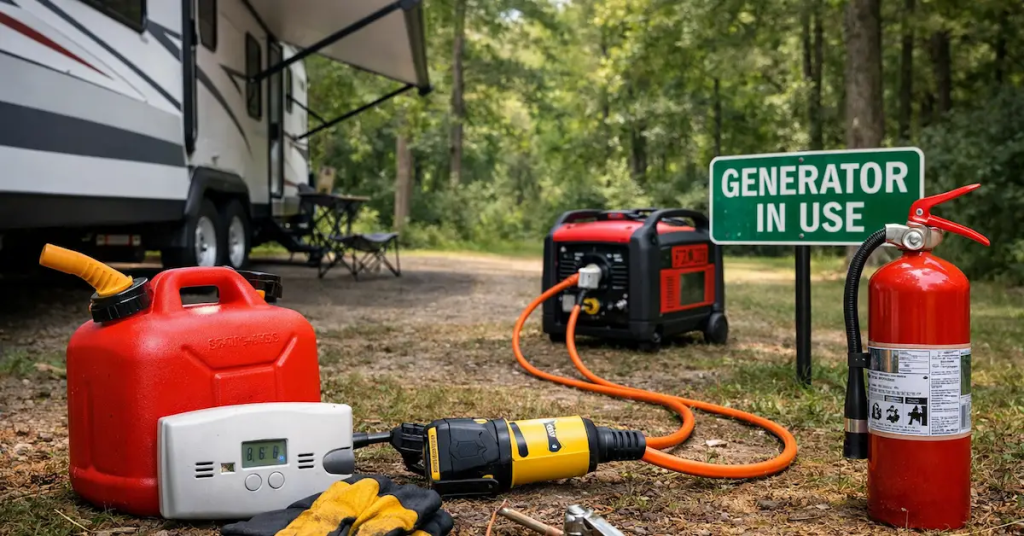
Generator Safety for Travel Trailers (Complete RV Generator Safety Guide)
Disclosure: This article contains affiliate links. If you purchase through these links, we may earn a commission at no additional cost to you.
Portable generators are one of the most useful tools for travel trailer owners. They allow you to run essential appliances such as air conditioners, microwaves, battery chargers, and lights when camping without electrical hookups.
Whether you’re boondocking on public land, staying at a campground without shore power, or preparing for emergency situations, a generator can provide reliable power for your RV.
However, portable generators must be used safely. Because generators burn fuel and produce electricity at the same time, improper use can create serious hazards including carbon monoxide poisoning, fire risks, and electrical damage to your RV.
The good news is that these risks are easily avoided by following a few basic safety practices. This guide will walk you through the most important generator safety tips for travel trailer owners, including proper placement, safe electrical connections, fuel handling, and essential safety equipment.
Why Generator Safety Matters for RV Owners
Generators combine three potentially dangerous elements: fuel, electricity, and engine exhaust. When used properly, they are very safe. When used incorrectly, they can create dangerous situations.
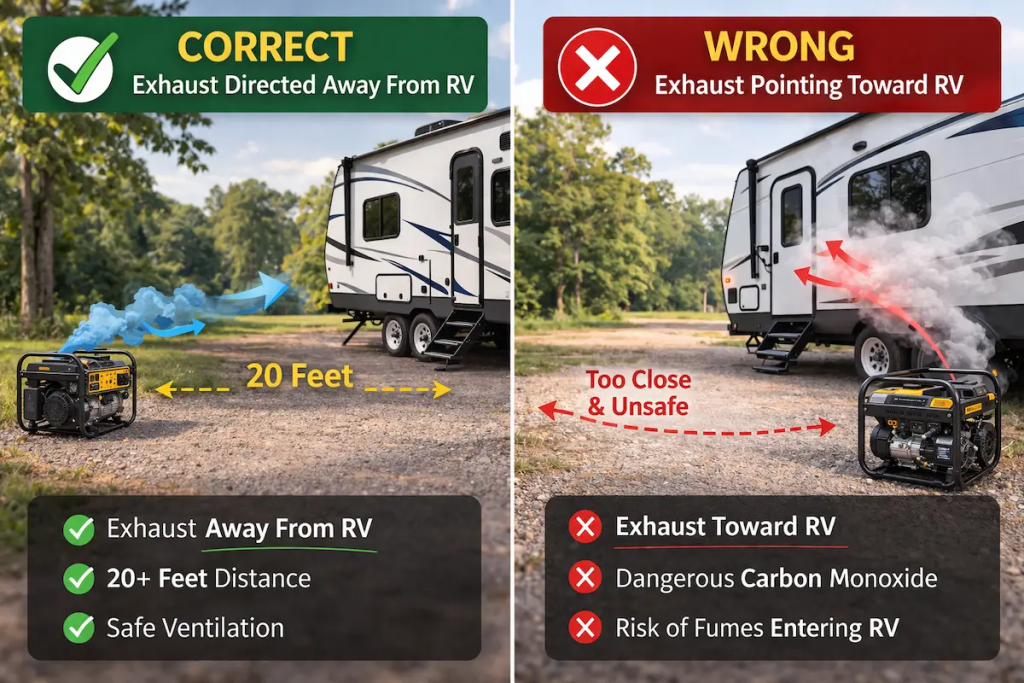
One of the most serious hazards associated with portable generators is carbon monoxide exposure. Carbon monoxide is an odorless, colorless gas produced by engine exhaust. If a generator is placed too close to your camper or operated in an enclosed space, these fumes can enter the trailer through doors, windows, or vents.
Fire hazards are another concern. Portable generators operate using gasoline, propane, or diesel fuel. Spilled fuel, refueling a hot generator, or placing a generator too close to combustible materials can increase the risk of fire.
Electrical damage is also possible if a generator is connected incorrectly. Overloading a generator, using improper extension cords, or failing to use surge protection can damage sensitive RV electronics such as air conditioners, converters, televisions, and refrigerators.
Fortunately, most generator accidents happen due to simple mistakes that are easy to avoid. By following proper setup procedures and using the right equipment, you can safely enjoy the convenience of portable power while camping.
Where to Place Your Generator When Camping
Generator placement is one of the most important safety considerations when operating a portable generator near your travel trailer.
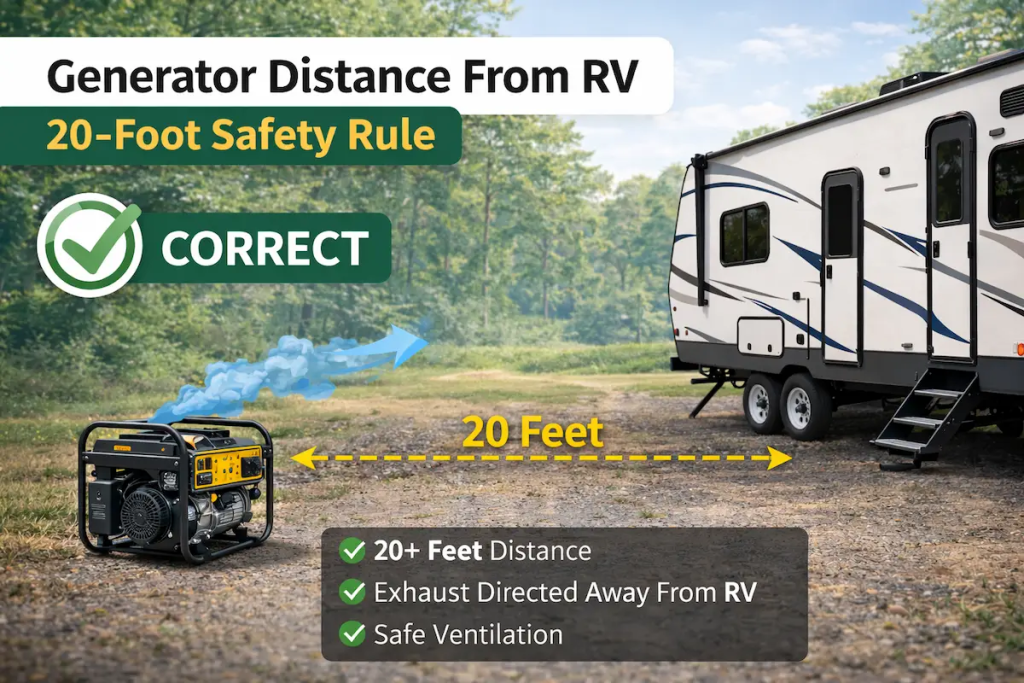
A common rule recommended by generator manufacturers and safety organizations is to place the generator at least 20 feet away from your camper whenever possible.
Position the generator so that the exhaust is directed away from the trailer, especially away from doors, windows, and roof vents where fumes could enter the living area.
Your generator should never be operated in enclosed or partially enclosed spaces such as:
- Inside the RV
- Inside a garage or shed
- Underneath the trailer
- Inside truck beds with tonneau covers
- Near open windows or vents
The generator should be placed on stable, level ground to prevent tipping and to ensure proper engine operation.
If weather conditions are poor, many RV owners use a generator tent or cover that protects the generator from rain while still allowing proper ventilation.
Recommended generator cover:
Example product:
IGAN Portable Generator Tent Running Cover
This type of cover allows the generator to run safely during rain while protecting the electrical components from moisture.
Step-by-Step: How to Safely Run a Generator With Your Travel Trailer
Following a simple setup routine each time you run your generator will help prevent most safety issues.
Step 1: Inspect the Generator
Before starting your generator, perform a quick inspection.
Check the oil level to make sure it is within the recommended range. Running a generator with low oil can cause severe engine damage.
Inspect the generator for fuel leaks, loose wiring, or damaged outlets. Make sure the air vents are clear and the generator is sitting on stable ground.
If your generator has not been used recently, it is also a good idea to check the air filter and confirm that fresh fuel is in the tank.
Step 2: Place the Generator at a Safe Distance
Move the generator to a safe location before starting it.
Place the generator at least 20 feet from the trailer and position the exhaust so that it points away from the camper.
Avoid placing the generator directly behind the RV where exhaust could accumulate near windows or roof vents.
Generators should always be operated outdoors with plenty of ventilation.
Step 3: Connect Proper RV Power Equipment
Travel trailers the use 30-amp or 50-amp electrical systems, and the generator should be connected using equipment designed specifically for RV use.
One of the most important safety devices is an RV surge protector.
A surge protector protects your RV from voltage spikes, low voltage conditions, and wiring issues that can damage electronics and appliances.
Recommended surge protectors:
Hughes Power Watchdog 30-Amp Surge Protector
Or the Progressive Industries EMS-PT50X Portable Surge Protector
These devices plug into the generator outlet and provide protection before power reaches your trailer.
If your generator is located far from the camper, you may also need a heavy-duty RV extension cord.
Recommended extension cords:
Camco 30-Amp RV Extension Cord or the
GearIT 50-Amp RV Extension Cord
These cords are designed to handle the electrical loads required by travel trailers.
Following a simple setup routine each time you run your generator will help prevent most safety issues.
Step 4: Start the Generator Before Adding Load
Once the generator is placed safely and connected to your power equipment, start the generator before plugging in the trailer.
Allow the generator to run for a minute or two so that the engine can stabilize and reach normal operating speed.
Starting the generator before adding electrical load helps prevent voltage fluctuations that could damage appliances.
Step 5: Connect the Travel Trailer
After the generator has stabilized, plug the surge protector into the generator outlet.
Next, plug the RV power cord into the surge protector.
At this point, electricity will begin flowing to the trailer and your RV systems will begin operating normally.
If you are unsure what size generator your trailer requires, you may find this guide helpful:
Recommended reading: What Size Generator Do I Need for a Travel Trailer
Step 6: Monitor Generator Operation
While the generator is running, check on it periodically.
Look for signs of overheating, unusual noise, or fuel leaks.
Make sure the generator remains level and that the exhaust area remains clear of obstructions.
It is also a good idea to keep an eye on fuel levels, especially if you are running high-power appliances such as an RV air conditioner.
If you’re running an air conditioner from your generator, you may also want to read:
Can a 3500 Watt Generator Run a Travel Trailer AC
Step 7: Shut Down the Generator Safely
When you are finished using the generator, shut it down safely.
First turn off or unplug high-power appliances inside the RV.
Next disconnect the trailer from the generator by unplugging the power cord.
Finally, turn off the generator and allow it to cool before refueling.
Never add fuel to a hot generator.
Preventing Carbon Monoxide Exposure
Carbon monoxide is one of the most dangerous risks associated with generator use.
Because carbon monoxide gas is invisible and odorless, it can accumulate without warning if generators are operated too close to enclosed spaces.
Every travel trailer should have a functioning carbon monoxide detector installed inside the living area.
These detectors alert you if carbon monoxide levels become dangerous.
Recommended detector:
Kidde Battery-Operated Carbon Monoxide Detector
Even if your RV already has a built-in detector, carrying a backup detector provides an extra layer of protection.
If anyone inside the trailer experiences symptoms such as headaches, dizziness, nausea, or confusion while a generator is running, turn off the generator immediately and move to fresh air.
Electrical Safety for Travel Trailers
Generators must be sized correctly to power your RV safely.
If a generator is overloaded, it can cause voltage fluctuations that damage appliances and electronics.
This is why it is important to understand the difference between starting watts and running watts when choosing a generator.
High-power appliances such as RV air conditioners require a large surge of power when they first start.
If you’re unsure about generator sizing, see:
Best Portable Generators for Travel Trailers
Using a surge protector is one of the easiest ways to protect your RV electrical system from generator power fluctuations.
Electrical Safety When Running a Generator
One of the most common generator mistakes RV owners make is running too many appliances at once. Portable generators have limited wattage capacity, and exceeding that capacity can cause voltage drops, equipment damage, or generator shutdowns.
The chart below shows the typical power requirements of common RV appliances so you can better understand how much generator capacity is needed.
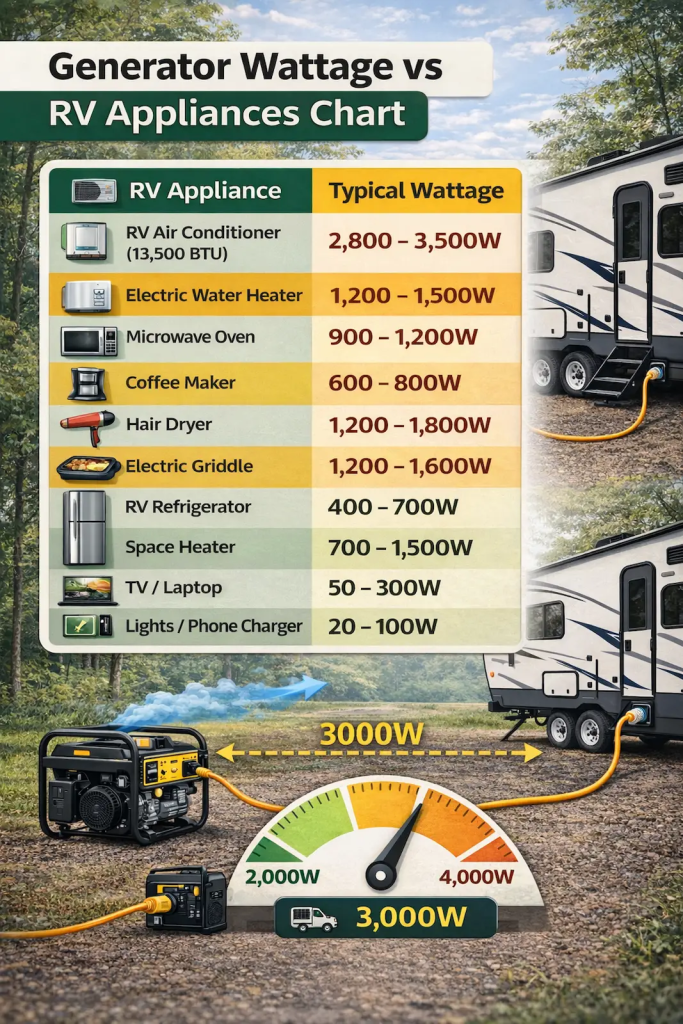
Choosing the correct generator size is important for avoiding overloads and protecting your RV appliances. If you’re unsure what size generator you need, see our guide: What Size Generator for a Travel Trailer.
Generator Fuel Safety Tips
Because portable generators use flammable fuels, safe fuel handling is essential.
Fuel should always be stored in approved gasoline containers and kept away from campfires, grills, or other heat sources.
Never refuel a generator while it is running or while the engine is still hot.
Spilled fuel can ignite if it contacts hot engine parts.
Allow the generator to cool for several minutes before adding fuel.
It is also recommended to store fuel containers outside the RV in a well-ventilated storage area.
Essential Generator Safety Equipment
A few simple accessories can make generator operation much safer for travel trailer owners.
RV Surge Protector
Protects your RV from electrical damage caused by power spikes or voltage issues.
Recommended products:
Hughes Power Watchdog
Progressive Industries EMS
Heavy-Duty RV Extension Cord
Allows safe power transfer between the generator and trailer.
Recommended:
Camco 30-Amp RV Extension Cord
GearIT 50-Amp RV Extension Cord
Carbon Monoxide Detector
Provides early warning of dangerous exhaust fumes.
Recommended:
Kidde Carbon Monoxide Detector
Generator Rain Cover
Allows safe generator operation during rain while maintaining airflow.
Recommended:
IGAN Portable Generator Tent
Campground Generator Rules
Many campgrounds have rules regarding generator use.
Common rules include:
- Quiet hours during the evening and early morning
- Noise restrictions
- Designated generator hours
Because of these restrictions, many campers prefer inverter generators, which are significantly quieter than traditional generators.
You can learn more here:
Best Quiet Generators for Camping
Generator Safety Checklist
Before running your generator, review this quick safety checklist.
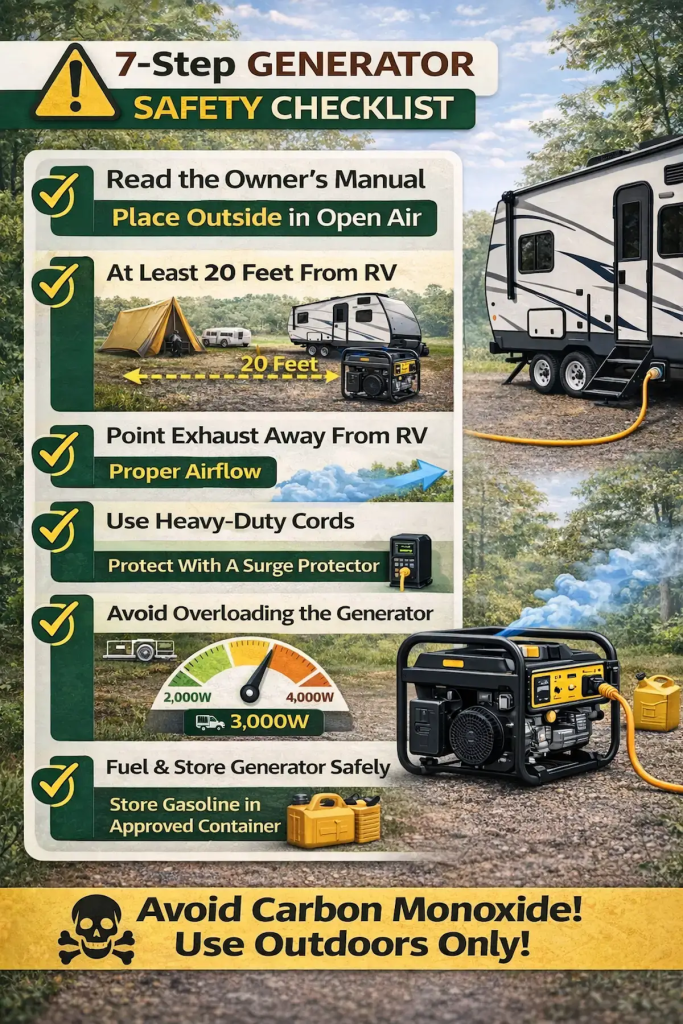
✔ Generator placed at least 20 feet from trailer
✔ Exhaust directed away from RV doors and windows
✔ Surge protector connected
✔ Oil level checked
✔ Fuel stored safely
✔ Carbon monoxide detector functioning
✔ Generator placed on stable ground
Following this checklist each time you run your generator can greatly reduce the risk of accidents.
Final Thoughts on Generator Safety
Portable generators make travel trailer camping more comfortable and flexible by providing power anywhere you go.
By following proper placement guidelines, using the right electrical equipment, and handling fuel safely, you can operate a generator with confidence while protecting both your RV and your family.
Taking a few extra minutes to set up your generator correctly ensures that you can enjoy reliable power during your camping trips without unnecessary risks.