
Introduction
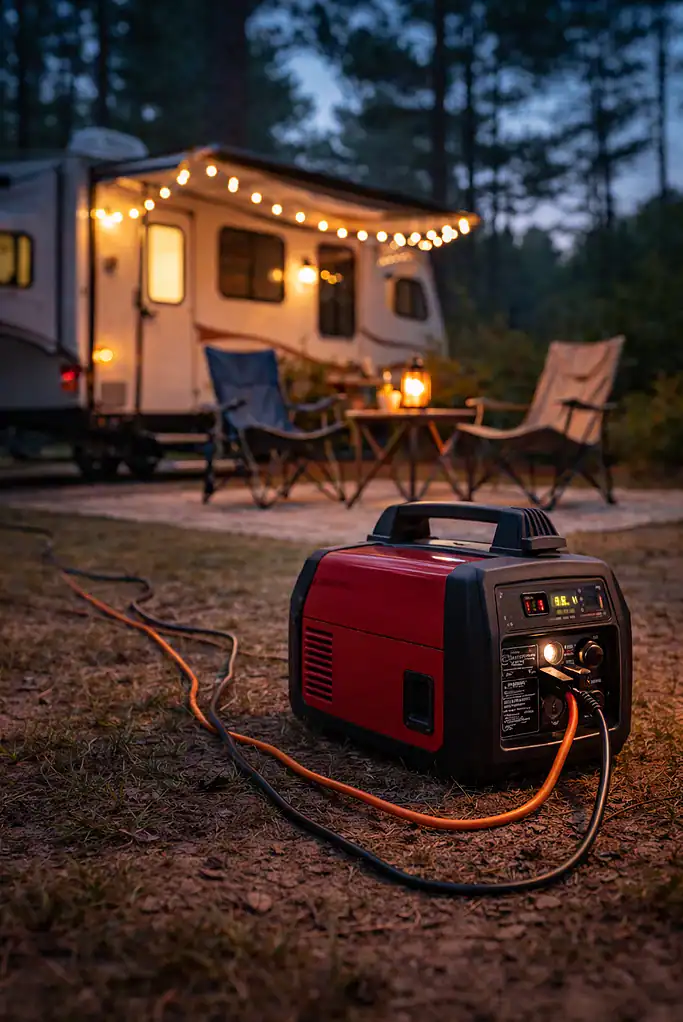
Choosing a quiet generator for RV campgrounds isn’t just about comfort — it’s often about necessity.
Many campgrounds enforce strict quiet hours and prohibit the use of loud open-frame generators. Excessive noise can disturb neighboring campers and reduce the overall enjoyment of your trip.
The quietest generators for RV use are typically inverter models designed to operate at lower decibel levels while still providing reliable power for travel trailers.
In this guide, we’ll compare the quietest generators for RV campgrounds, explain what decibel ratings actually mean, and help you choose a model that balances low noise with sufficient power.
Disclosure: This article contains affiliate links. If you purchase through these links, we may earn a commission at no additional cost to you.
Why Noise Level Matters at RV Campgrounds
Noise is one of the most common complaints in RV parks and public campgrounds.
Many campgrounds enforce quiet hours — often between 10 PM and 7 AM — and may restrict the use of generators that exceed certain decibel levels.
A loud generator not only disrupts nearby campers, but it may also result in warnings or restrictions from campground management.
Choosing a quieter inverter generator helps ensure:
- Compliance with campground rules
- A more relaxing camping experience
- Better relationships with neighboring RV owners
For campers who frequently stay in developed RV parks, generator noise should be a primary consideration — not an afterthought.
What Is Considered a Quiet Generator?
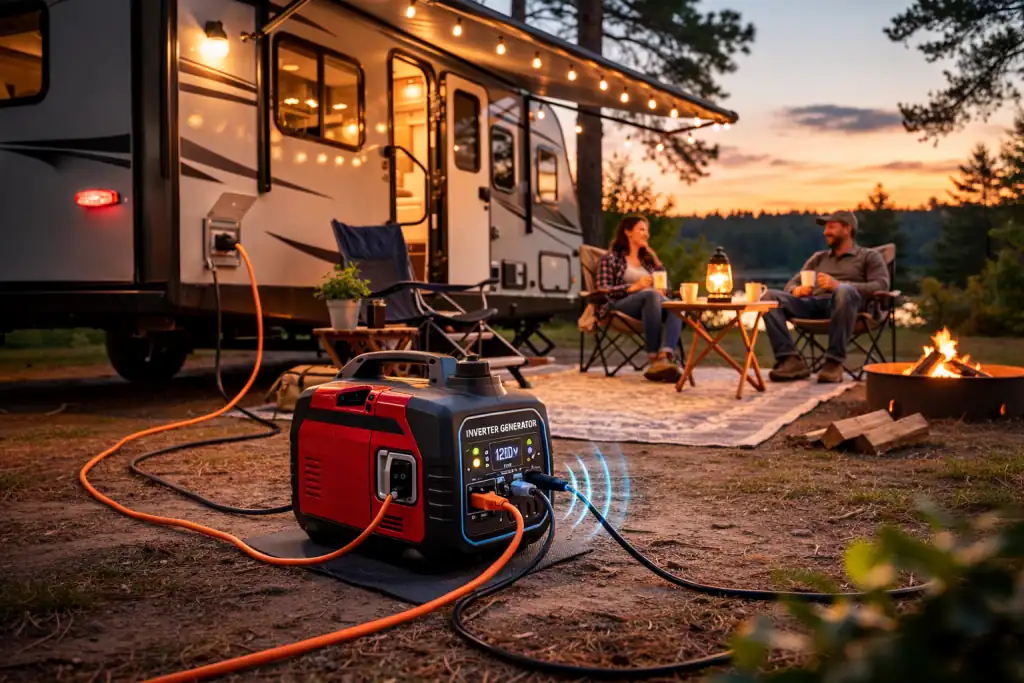
Generator noise is measured in decibels (dB), typically at a distance of 23 feet.
For reference:
- 50 dB – Similar to a quiet conversation at home
- 60 dB – Normal conversation level
- 70 dB – Loud vacuum cleaner
In general, a generator operating below 60 decibels under moderate load is considered campground-friendly.
Most inverter generators fall within the 48–60 dB range, depending on load and distance. By comparison, traditional open-frame generators often exceed 70 decibels and may not be suitable for many RV parks.
Lower decibel ratings make a noticeable difference, especially in quiet natural settings where sound travels more easily.
Inverter vs Open-Frame Generators (Noise Comparison)
Inverter generators are significantly quieter than traditional open-frame models.
Open-frame generators are typically designed for construction sites and emergency home backup. They prioritize power output over noise control and often operate at 70–80 decibels.
Inverter generators, by contrast, are engineered with enclosed cases, sound-dampening materials, and variable engine speeds. They adjust engine RPM based on load, reducing noise during lighter power usage.
Here’s a simplified comparison:
| Feature | Inverter Generator | Open-Frame Generator |
|---|---|---|
| Noise Level | 48–60 dB | 70–80 dB |
| Campground Friendly | Yes | Often No |
| Fuel Efficiency | Higher | Lower |
| Best Use | RV camping | Job sites / backup power |
For campground use, inverter generators are almost always the better choice when noise is a priority.
Quick Comparison: Quietest RV Generators
Here’s a quick overview of inverter generators known for low-noise operation and campground-friendly performance.
| Generator | Starting Watts | Noise Level | Weight |
|---|---|---|---|
| Honda EU2200i | 2200W | 48–57 dB | ~47 lbs |
| Westinghouse iGen2200 | 2200W | ~52 dB | ~46 lbs |
| WEN 56200i | 2000W | ~51 dB | ~48 lbs |
| Champion 4500 Dual Fuel | 4500W | ~61 dB | ~100 lbs |
Quietest Overall Generator for RV Campgrounds
Recommended Generator: Honda EU2200i Inverter Generator
The Honda EU2200i consistently ranks among the quietest portable inverter generators available. Operating as low as 48 decibels under light load, it remains one of the most campground-friendly options on the market.
Weighing under 50 pounds, it’s easy to transport while delivering reliable, stable power for small travel trailers and essential appliances.
Although it may not run most RV air conditioners on its own, it excels in quiet operation, fuel efficiency, and long-term reliability.
You can check current pricing and availability here.
Best Quiet 2000W Generator
Recommended Generator: Westinghouse iGen2200 Inverter Generator
The Westinghouse iGen2200 offers impressive quiet performance, typically operating around 52 decibels under normal load. This makes it well-suited for campground environments where noise control is important.
Weighing under 50 pounds, it’s portable and easy to store, while still providing sufficient power for lighting, battery charging, and small appliances.
For campers who prioritize low noise but want a more budget-friendly alternative to premium brands, this model strikes a strong balance.
You can check current pricing and availability here.
Best Quiet 3000W Generator for Running AC
Recommended Generator: Champion 4500-Watt Dual Fuel Inverter Generator
While slightly louder than ultra-compact 2000 watt models, the Champion 4500 Dual Fuel inverter generator remains relatively quiet for its size, typically operating around 61 decibels under moderate load.
It provides enough surge capacity to run most 13,500 BTU RV air conditioners while maintaining inverter-level noise control compared to open-frame generators.
The dual-fuel capability allows operation on gasoline or propane, adding flexibility for extended camping trips.
You can check current pricing and availability here.
Quietest Budget-Friendly Option
Recommended Generator: WEN 56200i Inverter Generator
The WEN 56200i delivers surprisingly quiet operation for its price range, typically operating around 51 decibels under moderate load.
Weighing under 50 pounds, it remains highly portable and campground-friendly, making it a practical option for small travel trailers and light-duty camping.
While it may not offer premium durability or high-wattage output, it provides an affordable entry point for campers who prioritize quiet operation.
You can check current pricing and availability here.
Campground Quiet Hours and Generator Rules
Most developed RV parks and public campgrounds enforce quiet hours, typically between 10 PM and 7 AM.
Some campgrounds restrict generator usage entirely during those hours, regardless of decibel rating. Others allow inverter generators if they remain below certain noise thresholds.
Before running a generator, it’s important to:
- Check campground policies
- Position the generator away from neighboring sites
- Avoid operating during posted quiet hours
- Consider battery charging earlier in the day
Even the quietest generator should be used respectfully to maintain a positive camping experience for everyone.
Tips to Make Your Generator Even Quieter
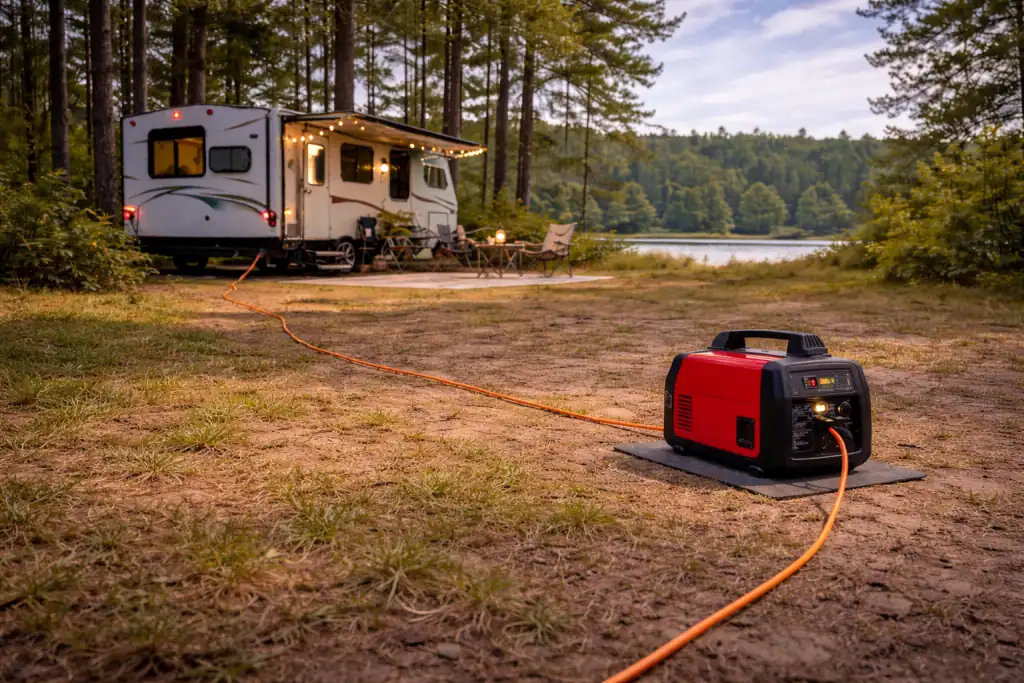
Even a quiet inverter generator can be made less noticeable with proper setup.
Consider these noise-reduction tips:
- Place the generator on soft ground rather than concrete
- Position it behind your trailer to help block direct sound
- Use rubber isolation pads to reduce vibration
- Keep it at least 20 feet away from your RV and neighboring sites
- Avoid running it at full load whenever possible
Proper placement and load management can significantly reduce perceived noise at the campsite.
Final Verdict
The quietest generators for RV campgrounds are almost always inverter models designed with noise control in mind.
For campers who prioritize ultra-low noise, compact 2000 watt inverter generators remain the most campground-friendly choice. Those needing air conditioning capability should look toward larger inverter units that balance higher wattage with controlled noise output.
By focusing on decibel ratings, inverter technology, and responsible generator use, you can maintain comfort without disrupting the camping experience for others.