
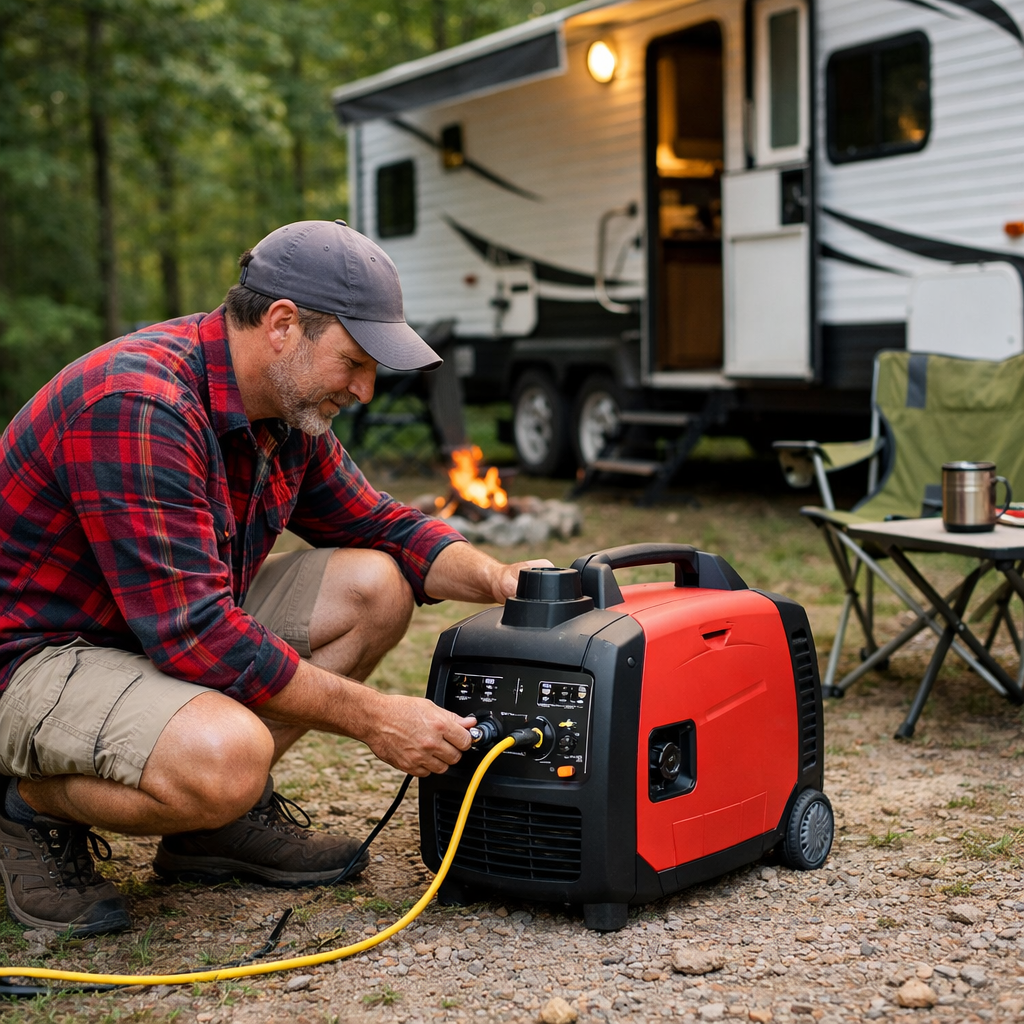
Introduction
Choosing the right generator for a travel trailer can feel overwhelming, especially with so many wattage ratings, fuel types, and generator styles available.
The wrong generator can leave you without enough power for your air conditioner, constantly tripping breakers, or disturbing nearby campers with excessive noise. The right generator, on the other hand, makes your camping experience smooth and stress-free.
If you’re looking for specific product recommendations, check out our complete guide to the best trailer generators for travel trailers. In this article, we’ll focus on how to determine exactly what type and size generator is right for your specific setup.
Step 1: Calculate Your Power Needs
The first step in choosing the right generator is understanding how much power your travel trailer actually requires.
Start by listing the appliances you plan to run at the same time. Common items include the air conditioner, microwave, refrigerator, coffee maker, battery charger, and lighting.
Most travel trailer air conditioners require between 1,500 and 2,000 running watts, with higher surge wattage needed during startup. Smaller appliances typically draw much less power, but they can add up quickly if used simultaneously.
Adding up your total expected running watts — and accounting for startup surge — will give you a realistic idea of the generator size you need.
Step 2: Understand Starting vs Running Watts
One of the most common mistakes when choosing a generator is misunderstanding the difference between running watts and starting (surge) watts.
Running watts refer to the continuous power a generator can provide while operating appliances normally. Starting watts, on the other hand, represent the extra burst of power required when certain appliances — especially air conditioners and microwaves — first turn on.
If your generator only meets your running watt requirements but doesn’t have sufficient surge capacity, you may experience tripped breakers or failed startups. Always check both ratings when comparing generator specifications.
Understanding this difference ensures you select a generator that handles real-world usage instead of just looking good on paper.
Step 3: Choose Between Inverter and Conventional Generators
One of the biggest decisions when selecting a generator is choosing between an inverter generator and a conventional open-frame generator.
Inverter generators are typically quieter, more fuel-efficient, and produce cleaner power that is safer for sensitive electronics. They are often preferred for campground use and travel trailers.
Conventional generators, sometimes called open-frame generators, tend to offer higher wattage at a lower upfront cost. However, they are usually louder and less fuel-efficient, making them less ideal for campground environments.
For most travel trailer owners, inverter generators provide the best balance of performance, noise control, and portability.
Step 4: Consider Noise Levels and Campground Restrictions
Noise levels are one of the most overlooked factors when selecting a generator for a travel trailer.
Many campgrounds enforce quiet hours and have decibel limits that generators must meet. A generator that is too loud can lead to complaints or even being asked to shut it down.
Inverter generators are generally much quieter than conventional models, often operating in the 50–60 decibel range under moderate load. Checking the manufacturer’s listed decibel rating can help ensure your generator will be campground-friendly.
Choosing a quieter generator not only keeps you compliant with campground rules but also improves your overall camping experience.
Step 5: Decide on Fuel Type
Fuel type is another important factor when choosing a generator for your travel trailer.
Gasoline generators are the most common and widely available. They are easy to refuel and typically offer strong power output, but gasoline has a shorter shelf life if stored for long periods.
Propane generators burn cleaner and propane can be stored longer without degrading. This makes propane appealing for occasional campers or emergency backup situations.
Dual-fuel generators offer flexibility by allowing you to switch between gasoline and propane depending on availability and preference. For many travel trailer owners, dual-fuel models provide the best balance of convenience and versatility.
Campers focused on quiet operation and low maintenance may also want to consider portable solar generators. Here are the best solar generators for camping trips.
Step 6: Think About Portability and Storage
Portability is often overlooked when selecting a generator, but it can significantly impact your camping experience.
Generators vary widely in weight, size, and design. Some models include built-in wheels and folding handles, while others must be carried manually. If you frequently move your generator or have limited storage space, compact and lightweight designs are worth prioritizing.
Consider where the generator will be stored during travel and how easily it can be loaded and unloaded. Choosing a model that fits your physical comfort level and storage constraints will make setup much easier at the campsite.
Common Mistakes to Avoid
When choosing a generator for a travel trailer, there are several common mistakes that can lead to frustration later.
One mistake is selecting a generator based solely on price without considering power requirements or noise levels. A cheaper generator that cannot run your air conditioner or exceeds campground decibel limits may end up costing more in the long run.
Another mistake is ignoring surge watt requirements. Appliances with high startup demand can overload undersized generators.
Finally, some buyers overlook portability and storage limitations, only realizing after purchase that the generator is heavier or bulkier than expected.
Taking time to evaluate power needs, fuel type, and campground restrictions helps prevent these issues.
Final Thoughts
Choosing the right generator for your travel trailer doesn’t have to be complicated when you break the decision down into manageable steps.
By calculating your power needs, understanding surge requirements, comparing inverter and conventional options, and considering noise and fuel type, you can confidently select a generator that fits your camping style.
If you’re ready to compare specific models, be sure to review our complete guide to the best trailer generators for travel trailers to see top recommendations based on different needs and budgets.