
Introduction
Using a generator with your travel trailer provides convenience and flexibility, but it also comes with important safety responsibilities.
Improper placement, poor ventilation, unsafe electrical connections, or careless fuel handling can create serious risks — including fire hazards and carbon monoxide exposure.
This generator safety checklist will walk you through the essential precautions every travel trailer owner should follow before, during, and after generator use.
Why Generator Safety Matters for Travel Trailers
Generators combine fuel, electricity, and confined outdoor spaces — three factors that require careful handling.
Travel trailers are often parked in campgrounds where neighboring campers are nearby, ventilation may be limited, and terrain can vary. Improper generator use not only puts your own safety at risk but can also affect those around you.
Carbon monoxide poisoning, electrical shock, and fire hazards are the most serious concerns associated with improper generator use. Following a clear safety checklist significantly reduces these risks and ensures your camping experience remains enjoyable and stress-free.
Pre-Use Safety Checklist
Before starting your generator, run through this basic safety checklist:
- Inspect the generator for visible damage, loose wires, or fuel leaks
- Check oil levels and top off if necessary
- Confirm the fuel cap is secure
- Ensure the generator is placed on a stable, level surface
- Verify that extension cords are rated for outdoor use and heavy-duty load
- Make sure all appliances inside the trailer are turned off before starting the generator
Taking a few minutes to complete these checks can prevent mechanical issues and electrical overload problems.
Safe Placement and Ventilation
Proper generator placement is essential to prevent carbon monoxide buildup and fire hazards.
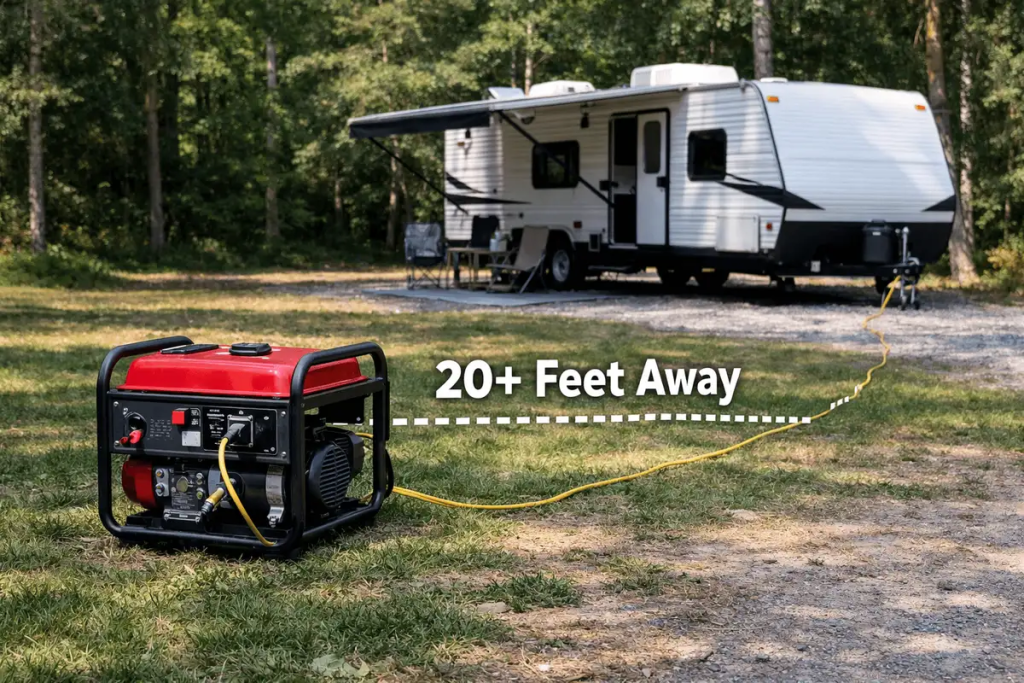
Always position the generator outdoors and at least 20 feet away from your travel trailer, with the exhaust directed away from doors, windows, and vents. Never operate a generator inside a trailer, under an awning, inside a garage, or in an enclosed space.
Generators should be placed on a dry, level surface to prevent tipping and reduce fire risk. Avoid placing the unit near dry leaves, tall grass, or flammable materials.
Even when camping in open areas, wind direction can affect exhaust flow. Periodically check that exhaust fumes are not drifting toward your trailer.
Electrical Connection Safety
Safe electrical connections are just as important as proper placement.
Always use heavy-duty, outdoor-rated extension cords that match the generator’s output capacity. Undersized or damaged cords can overheat and create fire hazards.
Never overload the generator by plugging in more appliances than its rated wattage allows. If possible, plug your travel trailer directly into the generator using a proper RV adapter instead of running multiple separate extension cords.
Before shutting down the generator, turn off or unplug connected appliances to reduce electrical stress during startup and shutdown cycles.
If you are still comparing models, see our guide to the best trailer generators for travel trailers to evaluate options based on power output and noise levels.
Fuel Handling and Storage Safety
Improper fuel handling is one of the most common causes of generator-related fires.
Always allow the generator to cool completely before refueling. Adding gasoline to a hot engine can cause vapors to ignite.
Store fuel in approved, clearly labeled containers and keep them away from direct sunlight and heat sources. Never store fuel inside your travel trailer.
When transporting fuel, ensure containers are tightly sealed and secured to prevent spills. Clean up any spilled fuel immediately before starting the generator.
Weather and Environmental Considerations
Weather conditions can impact both generator performance and safety.
Never operate a generator in heavy rain or standing water unless it is properly protected by a generator cover specifically designed for ventilation. Water exposure can create electrical shock hazards and damage internal components.
Avoid placing generators directly on muddy or unstable ground. Use a firm, dry surface whenever possible.
Extreme heat can also affect generator performance. Ensure adequate airflow around the unit and avoid enclosing it in tight spaces where heat can build up.
Carbon Monoxide Safety

Carbon monoxide (CO) is an odorless, colorless gas produced by gasoline-powered engines. Exposure can cause serious injury or death within minutes.
Never operate a generator inside your travel trailer, under the trailer, inside a garage, or in any enclosed space — even if doors or windows are open.
Install a functioning carbon monoxide detector inside your travel trailer and test it regularly. Replace batteries as needed and never ignore warning alarms.
If anyone experiences symptoms such as dizziness, headache, nausea, or confusion while the generator is running, turn off the generator immediately and move to fresh air.
Generator Maintenance for Safe Operation
Routine maintenance plays a major role in safe generator operation.
Regularly change the oil according to the manufacturer’s recommendations, especially during periods of frequent use. Dirty oil can cause overheating and internal damage.
Inspect spark plugs, air filters, and fuel lines periodically to ensure proper performance. Replace worn components promptly.
Before storing your generator for an extended period, drain old fuel or use a fuel stabilizer to prevent buildup and clogging.
Keeping your generator properly maintained not only extends its lifespan but also reduces the likelihood of mechanical failure while camping.
Printable Safety Checklist
Use this quick checklist before each trip:
☐ Inspect generator for damage or leaks
☐ Check oil level
☐ Confirm proper outdoor placement (20+ feet from trailer)
☐ Ensure exhaust faces away from trailer
☐ Use heavy-duty, outdoor-rated extension cords
☐ Avoid overloading the generator
☐ Allow generator to cool before refueling
☐ Store fuel safely and away from heat
☐ Install and test carbon monoxide detector
☐ Perform routine maintenance checks
Keeping a printed copy of this checklist in your trailer can help prevent common safety mistakes.
Final Thoughts
Using a generator with your travel trailer can greatly enhance your camping flexibility, but safety must always come first.
By following a consistent safety checklist, ensuring proper placement and ventilation, and maintaining your equipment regularly, you can significantly reduce risks while enjoying reliable power.
If you’re still selecting the right generator for your setup, you may also want to review our guide on what size generator for a travel trailer to ensure your unit matches your power needs.