Looking for the best generator for an RV air conditioner? The wrong choice won’t just underperform — it can prevent your AC from starting at all.
RV air conditioners require high startup power (surge watts), and if your generator can’t handle it, you’ll trip breakers or stall your system.
👉 In this guide, we’ll show you the best generators for RV AC use — including quiet options, budget picks, and high-power models that actually work.
👉 Don’t want to read everything? Scroll down to see the best generators that actually run RV air conditioners.
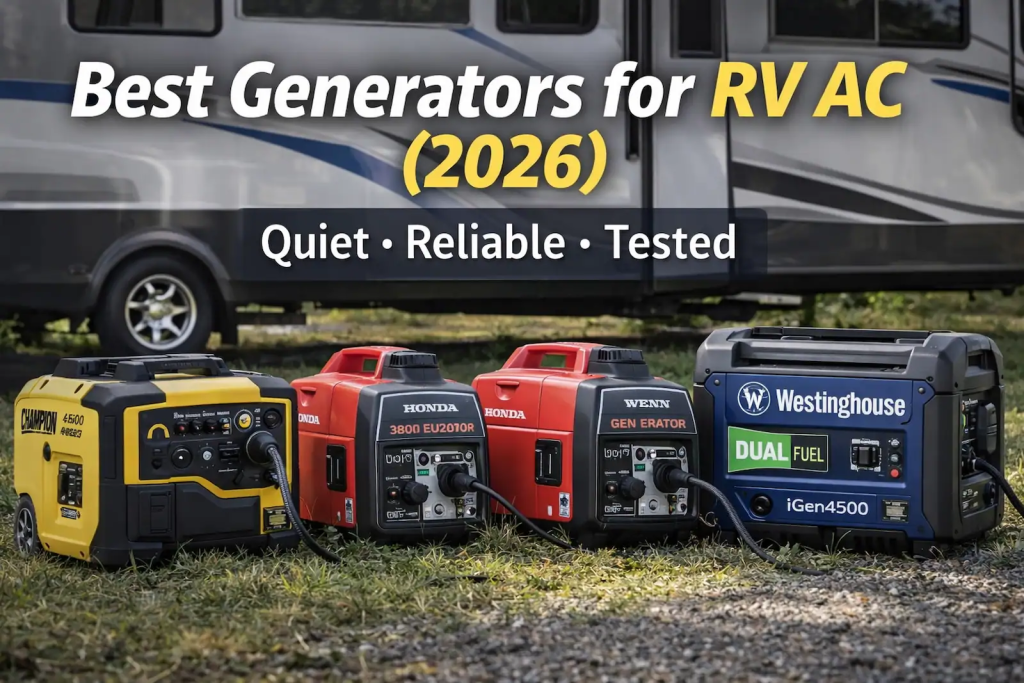
Quick Picks (Best Generators for RV AC)
- Best Overall: Champion 4500-Watt Inverter Generator
- Best Quiet Option: Honda EU2200i (Parallel Setup)
- Best Budget Option: WEN 3800-Watt Inverter Generator
- Best for Large RVs: Westinghouse 5000 Dual Fuel
Disclosure: This article contains affiliate links. If you purchase through these links, we may earn a commission at no additional cost to you.
RV Air Conditioner Wattage by BTU (Real-World Numbers)
Let’s put real numbers on the table. These are typical wattage ranges for rooftop RV air conditioners running under normal conditions with proper airflow and clean coils.
| BTU Rating | Typical Running Watts | What This Means |
|---|---|---|
| 8,000 BTU | 500–800W | Small trailers, vans, compact rigs — easier to run on smaller generators |
| 10,000 BTU | 600–1,000W | Mid-size RVs — can often run on 2000W generator with soft start |
| 13,500 BTU | 1,000–1,400W | Most common RV size — sweet spot for travel trailers |
| 15,000 BTU | 1,400–1,800W | Larger units — requires stronger generator to start reliably |
| 18,000 BTU | 1,800–2,200W | Large RVs or multi-zone systems — needs serious power |
When the compressor cycles off, and only the fan runs, power usage drops significantly — usually just a few hundred watts.
Startup Surge (Why Generators Struggle)
Startup surge is where most RV generators fail. When your air conditioner compressor kicks on, it needs a burst of power that’s much higher than normal running watts.
| BTU Rating | Typical Startup Watts | Real-World Impact |
|---|---|---|
| 8,000 BTU | ~1,600W | Most 2000W generators can handle this |
| 10,000 BTU | ~2,000W | Usually works on a 2000W inverter (better with soft start) |
| 13,500 BTU | ~2,800–3,000W | Where most small generators start to struggle |
| 15,000 BTU | ~3,200–3,500W | Needs at least a 3000–3500W generator |
| 18,000 BTU | ~3,800–4,400W | Requires a high-output generator |
Key takeaway: For most RV air conditioners, you’ll need 3,500–4,500 starting watts to avoid startup issues.
💡 Installing a soft start kit can reduce startup demand by up to 40%, allowing smaller generators to run your RV air conditioner without overload. learn more about soft starts with Best Soft Start for your RV AC, see Recommendations
👉 Click below to check current prices and find the best generator for your RV setup:
| Generator | Running Watts | Noise Level | Runtime | Best For |
| Champion 4500 | 3500 | Quiet | 14 hrs | Best overall |
| Honda EU2200i (x2) | 3600 | Very quiet | 8 hrs | Quiet camping |
| WEN 3800 | 3500 | Moderate | 8.5 hrs | Budget option |
| Westinghouse 5000 | 3900 | Quiet | 18 hrs | Large RVs |
How to Choose the Right Generator (Simple Guide)
If you’re not sure which generator to choose, here’s the simplest way to decide:
- 13,500 BTU AC: 3000–3500W generator (or smaller with soft start)
- 15,000 BTU AC: 3500–4500W generator minimum
- Want quiet camping: Honda EU2200i (parallel setup)
- Want easiest setup: Champion 4500 or Westinghouse 5000
👉 Most RV owners choose wrong by underestimating startup power — don’t make that mistake.
Best Overall: Champion 4500-Watt Inverter Generator

The Champion 4500 is one of the most popular RV generators for a reason. It delivers enough power to start and run most RV air conditioners while remaining relatively quiet.
Reliable, RV-ready power with enough wattage to run most air conditioners without struggle.
Pros:
- RV-ready with 30A outlet
- Electric start
- Long runtime
- Good balance of power and noise
Cons:
- Heavier than smaller inverter generators
👉 Best for: Most RV owners who want a reliable, all-in-one solution
Best Quiet Option: Honda EU2200i (Parallel Setup)
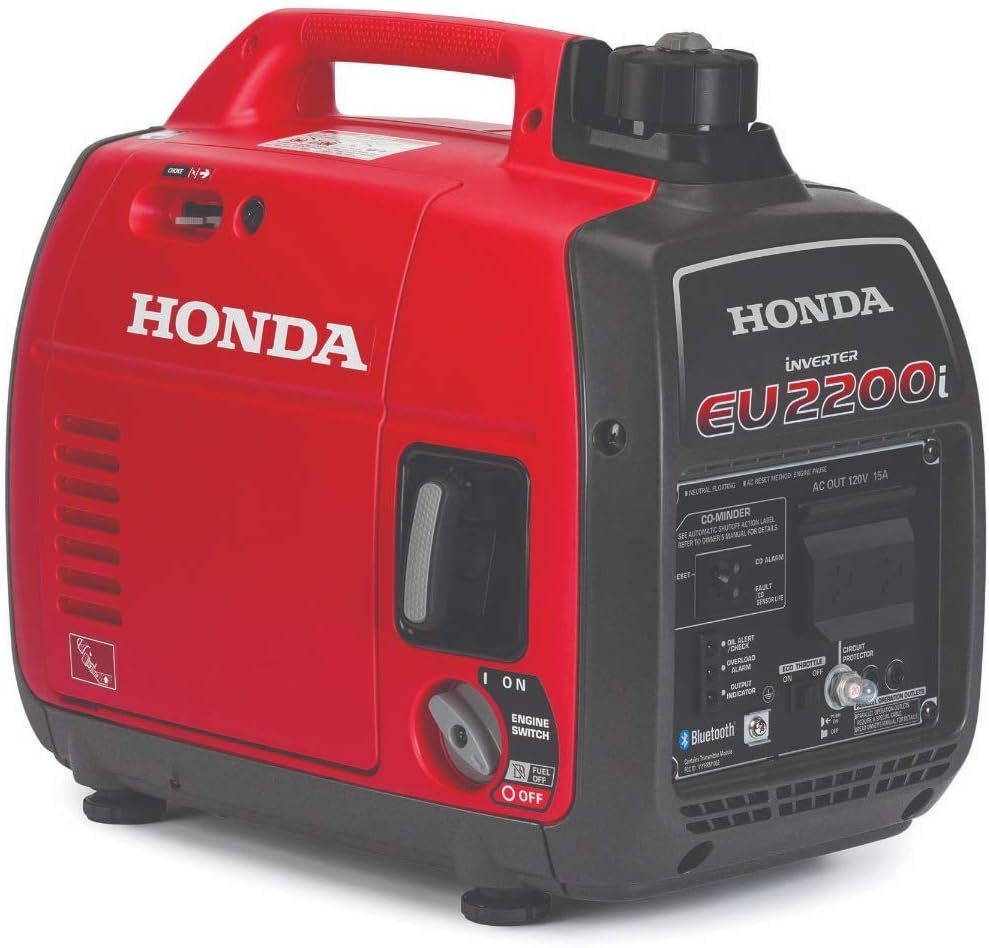
If noise is your biggest concern, the Honda EU2200i is hard to beat. While one unit alone won’t run most AC units, two connected in parallel can handle the load quietly.
Ultra-quiet generator setup ideal for running an RV air conditioner without disturbing nearby campers.
Pros:
- Extremely quiet
- Highly reliable
- Fuel efficient
Cons:
- Expensive (especially buying two)
👉 Best for: Campgrounds with strict noise limits.
Best Budget Option: WEN 3800-Watt Inverter Generator
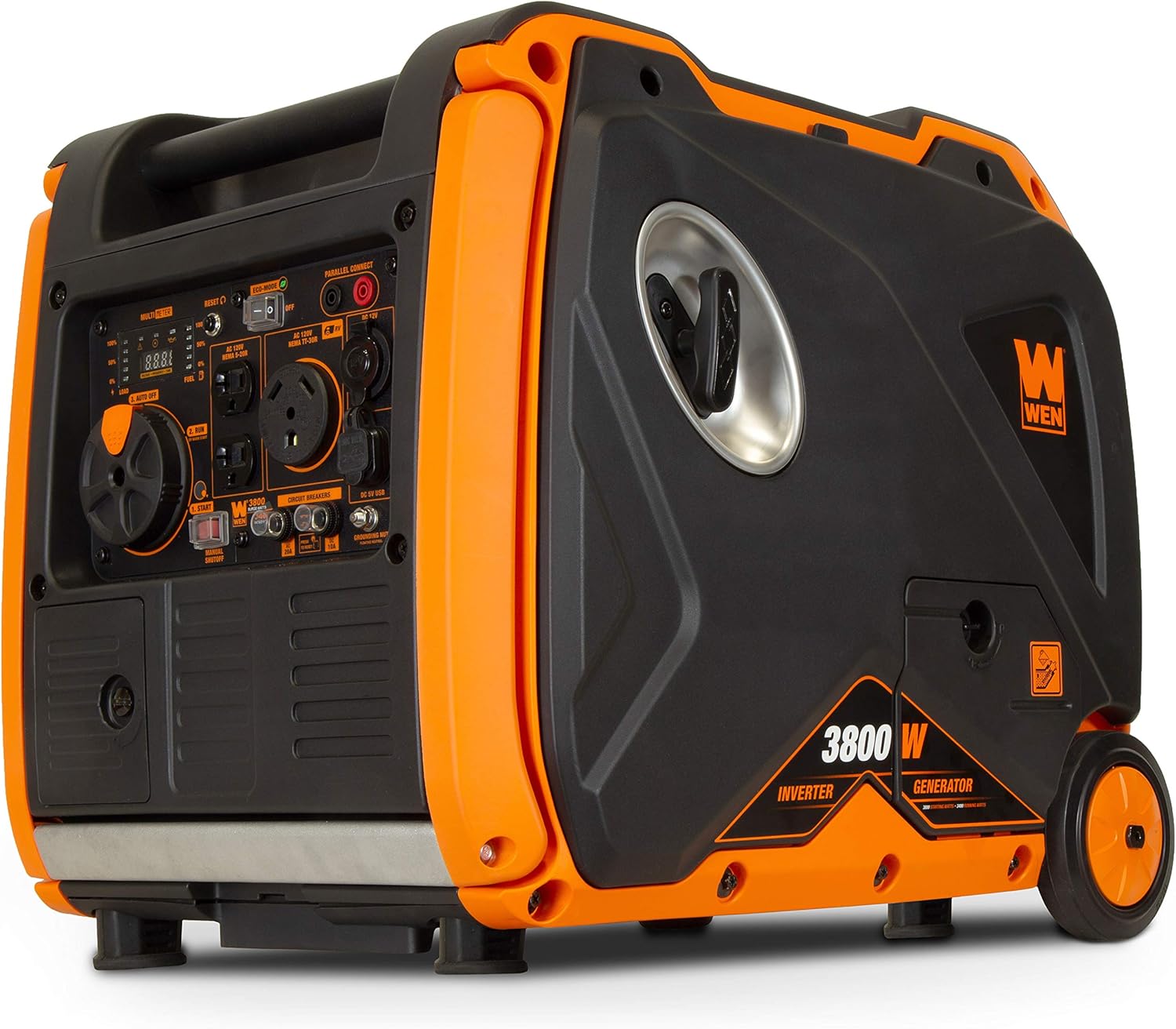
If you’re looking for a more affordable way to run your RV air conditioner, the WEN 3800 delivers surprising performance for the price.
Affordable power that can handle most RV air conditioners without breaking the bank.
Pros:
- Excellent value for the power
- Electric start
- RV-ready outlet
- Lightweight compared to similar models
Cons:
- Slightly louder than premium brands
- Not as refined as Honda or Yamaha
👉 Best for: Budget-conscious RV owners who still need enough power to run an AC unit.
Best for Large RVs: Westinghouse 5000 Dual Fuel

If you have a larger RV or a 15,000 BTU air conditioner, you need more power — and this is where the Westinghouse 5000 shines.
Reliable high-output power for larger RV air conditioners without startup issues.
Pros:
- 5000 peak watts handles larger AC units easily
- Dual fuel (gas + propane)
- Remote start for convenience
- Long runtime
Cons:
- Heavier than smaller inverter generators
👉 Best for: Larger RVs or anyone who wants a “no-struggle” AC startup.
Do You Need a Soft Start for Your RV AC?

In many cases — yes.
👉 Want to run your AC on a smaller generator? This is the upgrade most RV owners don’t know about.
If your generator struggles to start your RV air conditioner, this is the upgrade that fixes it.
Reduce startup surge and run your RV AC on smaller, quieter generators.
A soft start kit reduces the surge power required when your air conditioner turns on.
- Reduces startup watts by up to 40%
- Prevents generator overload
- Lets smaller generators run your AC
👉 This can be the difference between your AC running smoothly… or not starting at all.
Quietest Generator for RV Air Conditioner Use
If you camp in RV parks or national parks, noise matters more than you think.
Generators like the Honda EU2200i are known for whisper-quiet operation — especially when used in parallel.
👉 Quiet generators typically run around 50–60 dB, which is about the level of a normal conversation.
FAQ (RV Generator Questions Answered)
Can a 2000 watt generator run an RV air conditioner?
No — not by itself. You would need two generators in parallel or a soft start kit, and even then it can be borderline.
What size generator do I need for a 13,500 BTU AC?
You’ll typically need at least 3,000 starting watts, though more is safer.
What size generator for a 15,000 BTU AC?
Plan for 3,500–4,500 starting watts to avoid startup issues.
Final Recommendation
If you want the safest and easiest choice:
- Best overall: Champion 4500
- Best quiet setup: Honda EU2200i (parallel)
- Best budget: WEN 3800
- Best for large RVs: Westinghouse 5000
👉 Choose based on your AC size, noise tolerance, and budget, and you’ll avoid the most common RV generator mistakes.